Learn Hangul: The Complete Guide to the Korean Alphabet
Hangul (한글) is the Korean writing system — and unlike English spelling, it was designed on purpose. King Sejong the Great commissioned it in 1443 specifically so that ordinary people, not just the classically-educated elite who used Chinese characters, could learn to read and write. The result is a featural alphabet: each letter's shape is meant to hint at how your mouth makes the sound, not just represent it arbitrarily. That design choice is exactly why Hangul is famous for being fast to learn — most learners can read Hangul (not fluently understand it — read it, sound it out) within a few hours of focused practice, which is unusually fast for a non-Latin script.
This guide covers all 40 letters — 19 consonants, 21 vowels, counting the double consonants and diphthongs — the same set taught in eduNamu's free Korean alphabet course, in the same order. Each one has real native-speaker audio you can listen to inline.
How Korean syllable blocks work
Hangul doesn't write letters in a straight line like English. Letters group into syllable blocks: a consonant, a vowel, and (often) a second "closing" consonant called 받침 (batchim) all stack together into one square-shaped character. ㄱ (g) plus ㅏ (a) doesn't sit side by side as "ga" — it forms 가, one block. Add a batchim and 가 becomes 간, 갈, or 강 depending on which consonant closes it. Once you know the individual letters, sounding out any block is mechanical: read left-to-right, top-to-bottom within the block, consonant then vowel then (if present) batchim.
Single consonants
The 14 basic consonants. Most map onto a familiar English sound, but a few don't have a clean equivalent — those are exactly where listening to the audio matters more than reading a romanization.
- ㄹ isn't quite English r or l — it's closer to a quick tap of the tongue, like the tt in the American pronunciation of "butter." Listen for it rather than trying to force an r or an l.
- ㅇ is silent when it starts a syllable (it's a placeholder, not a sound) and becomes "ng" when it closes one — 아 is just "a", but 앙 is "ang".
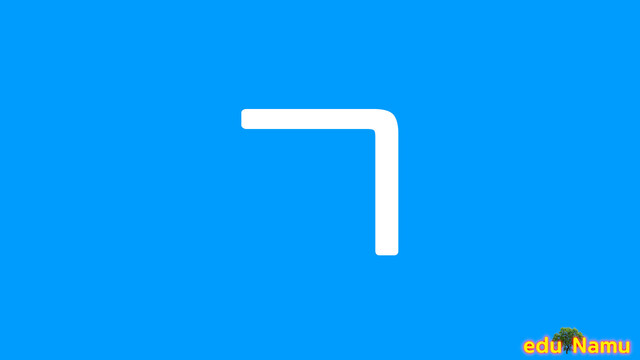 ㄱ
ㄱ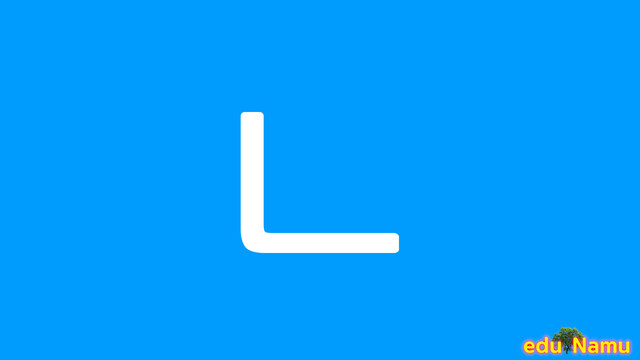 ㄴ
ㄴ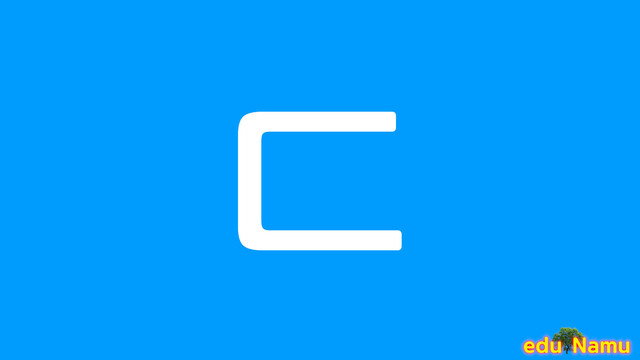 ㄷ
ㄷ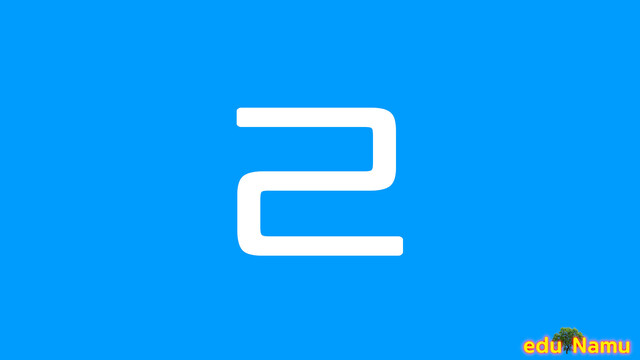 ㄹ
ㄹ ㅁ
ㅁ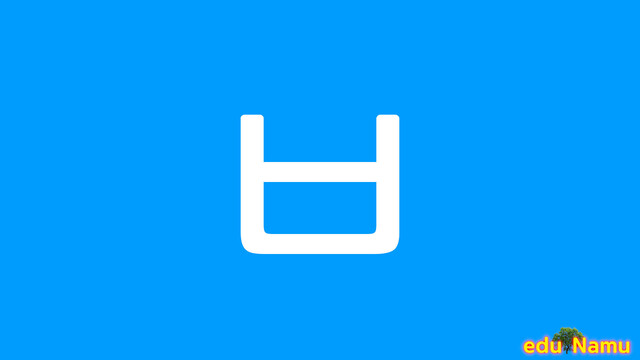 ㅂ
ㅂ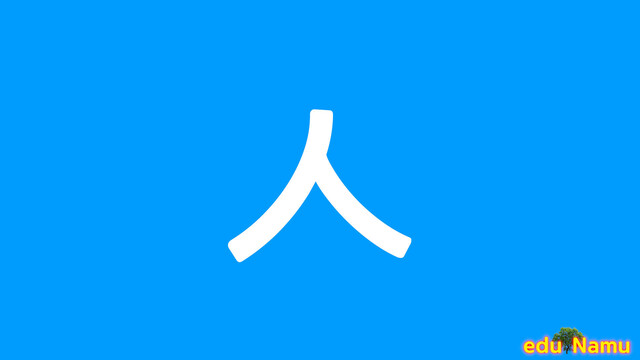 ㅅ
ㅅ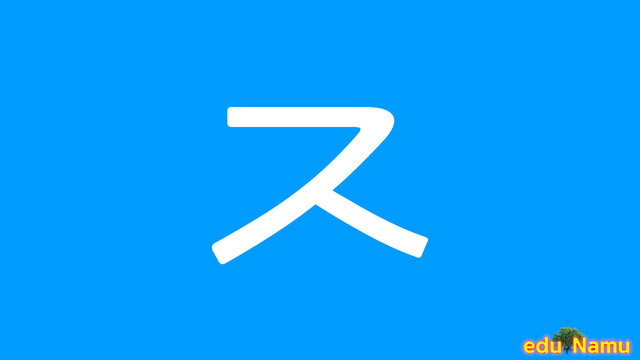 ㅈ
ㅈ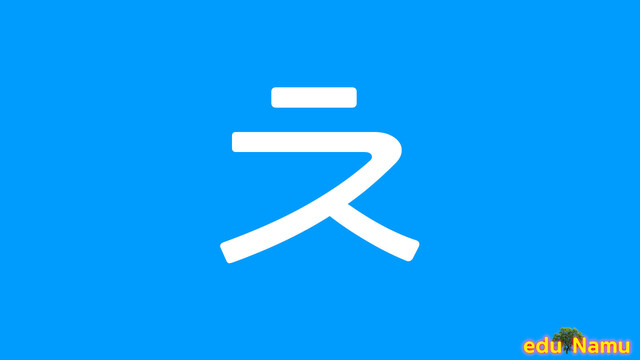 ㅊ
ㅊ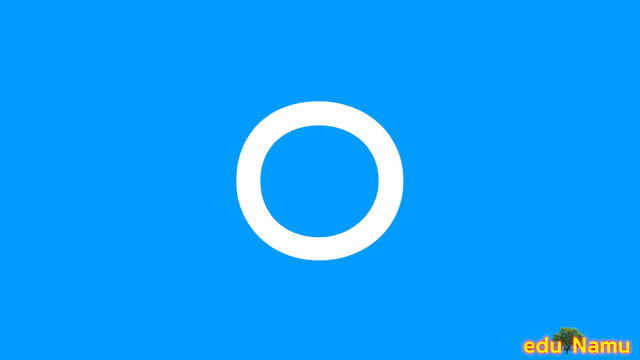 ㅇ
ㅇ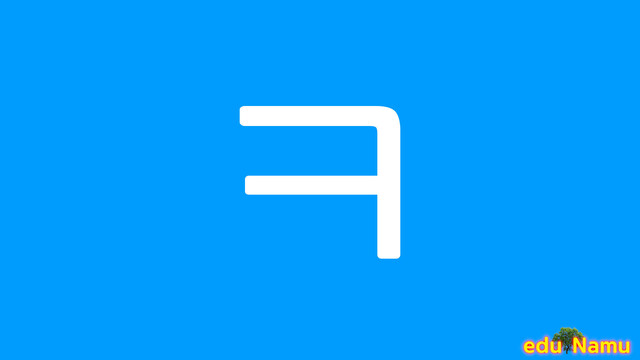 ㅋ
ㅋ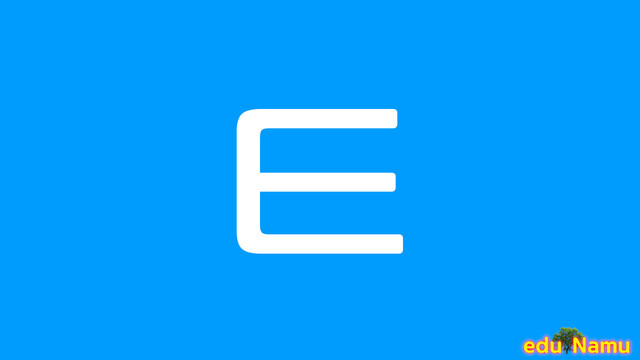 ㅌ
ㅌ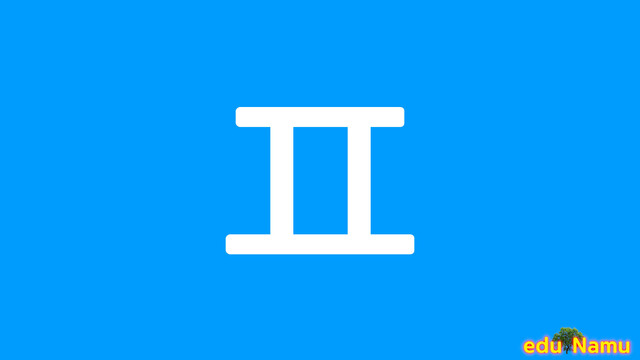 ㅍ
ㅍ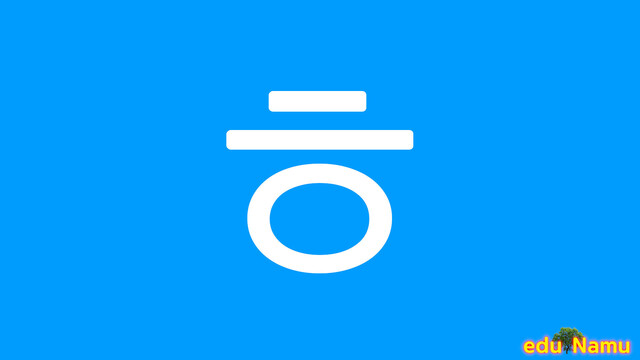 ㅎ
ㅎSingle vowels
The 10 basic vowels, including four that are really "y + vowel" combinations (ya, yeo, yo, yu) — learn the plain vowel first and the y-versions follow the same shape with an extra stroke.
- ㅓ (eo) and ㅗ (o) trip up almost every beginner — eo is an open "uh" sound (mouth relaxed), o is a rounded "oh" (lips pushed forward). Say them side by side with the audio a few times; the difference is more about mouth shape than the ear.
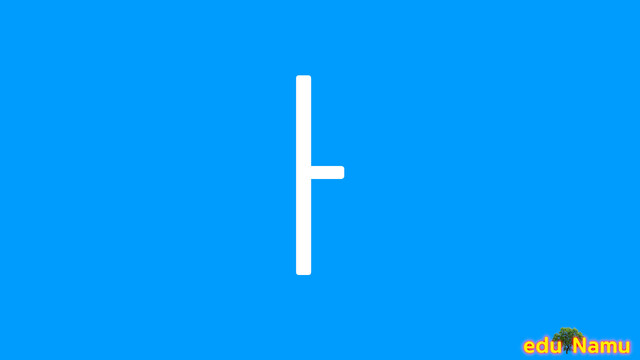 ㅏ
ㅏ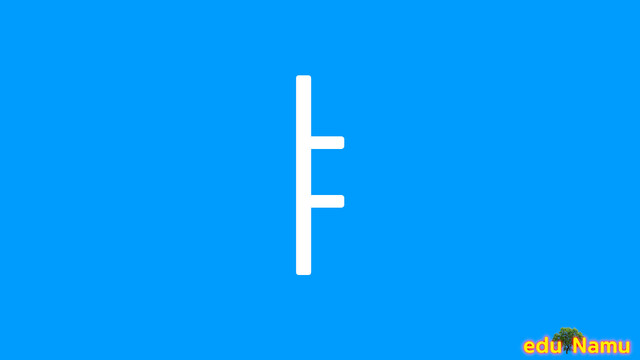 ㅑ
ㅑ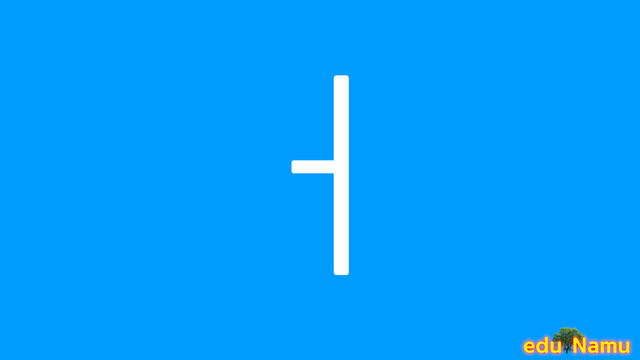 ㅓ
ㅓ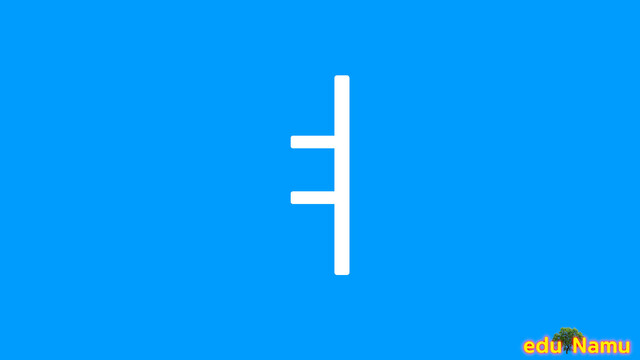 ㅕ
ㅕ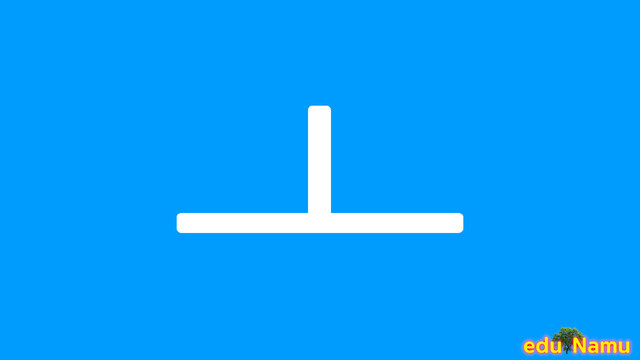 ㅗ
ㅗ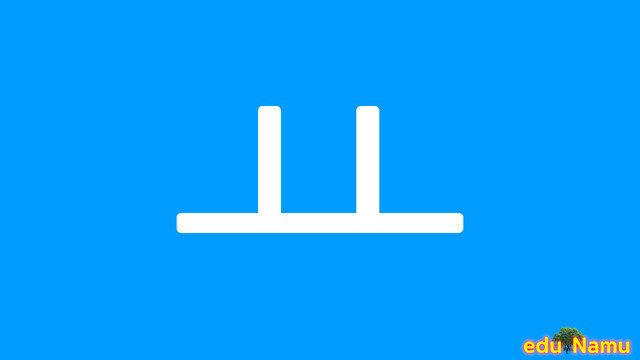 ㅛ
ㅛ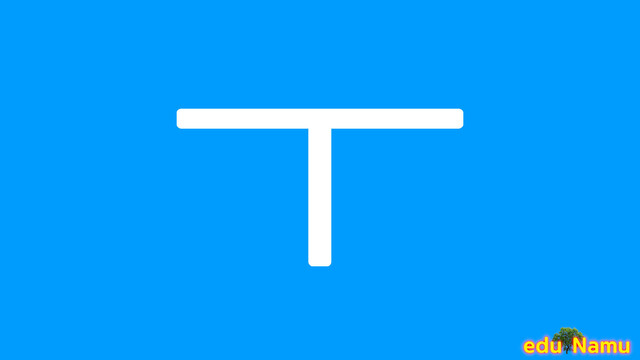 ㅜ
ㅜ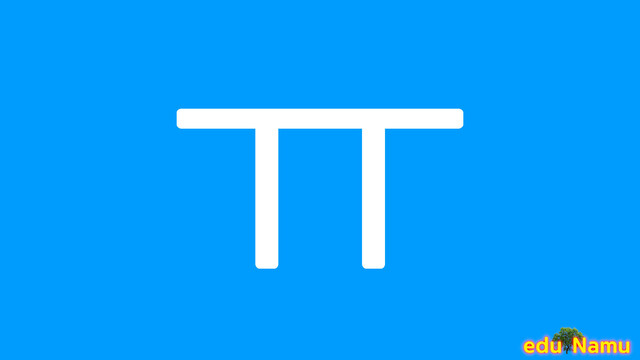 ㅠ
ㅠ ㅡ
ㅡ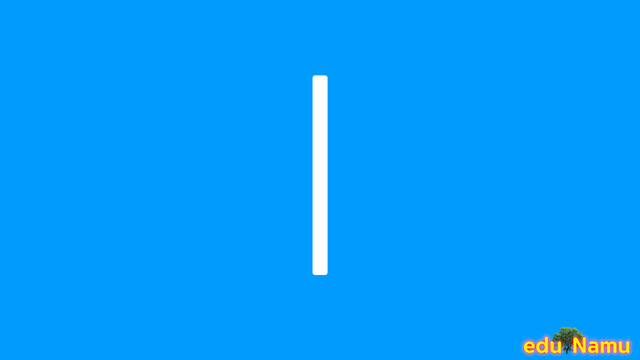 ㅣ
ㅣ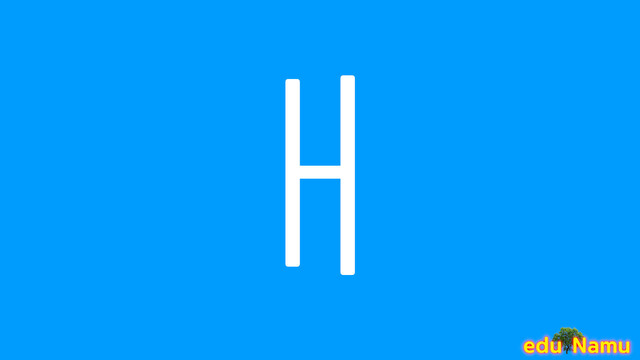 ㅐ
ㅐ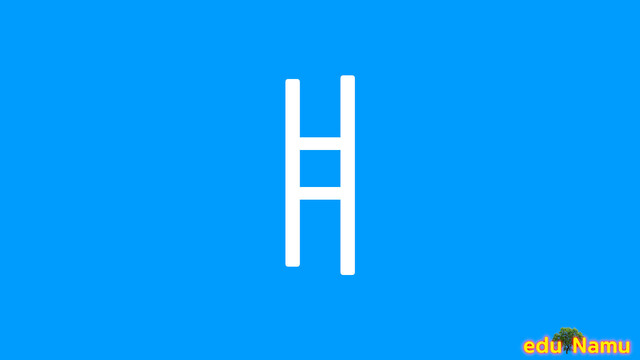 ㅒ
ㅒ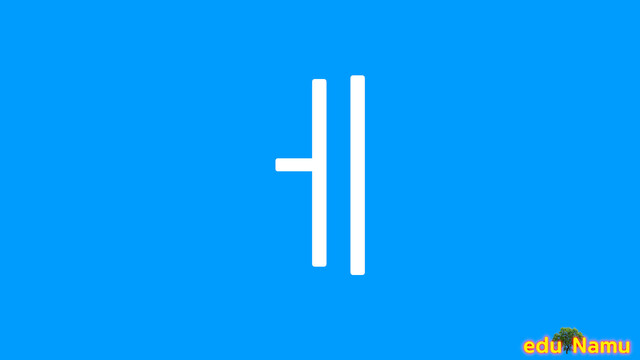 ㅔ
ㅔ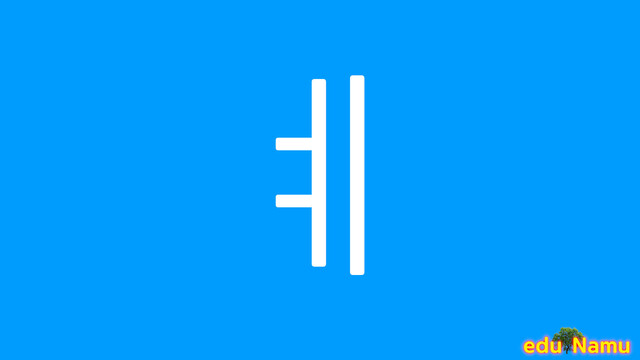 ㅖ
ㅖDouble consonants
Doubling a consonant's shape makes it "tense" — pronounced with more tightness in the throat and no puff of air, not simply louder. English doesn't really have this contrast, so this chapter is worth extra listening time.
- Try holding a tissue in front of your mouth: ㄱ, ㄷ, ㅂ (and their tense pairs ㄲ, ㄸ, ㅃ) — the plain versions puff the tissue slightly with a breath of air, the tense versions barely move it at all.
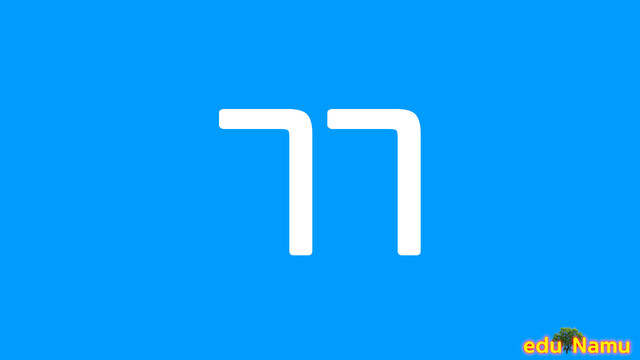 ㄲ
ㄲ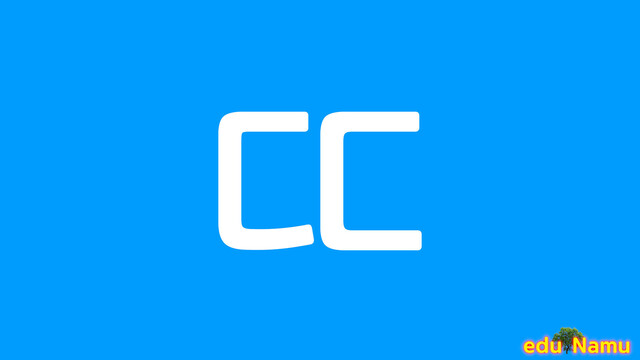 ㄸ
ㄸ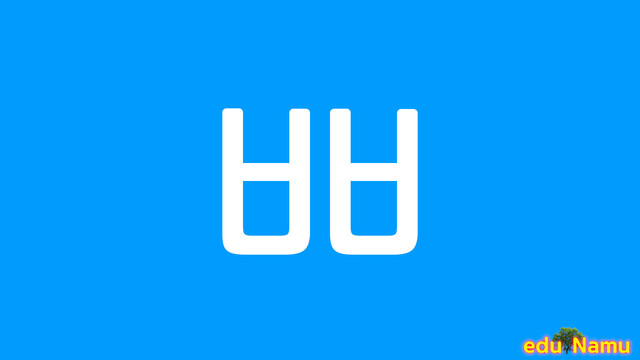 ㅃ
ㅃ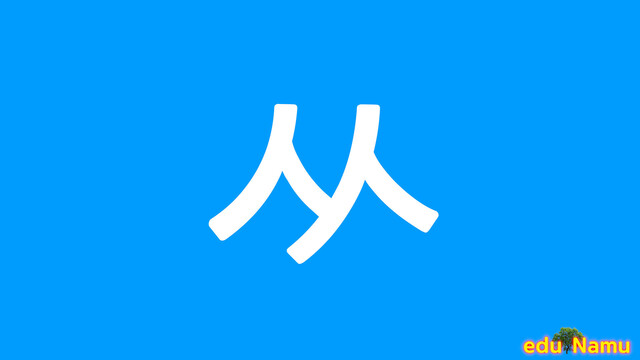 ㅆ
ㅆ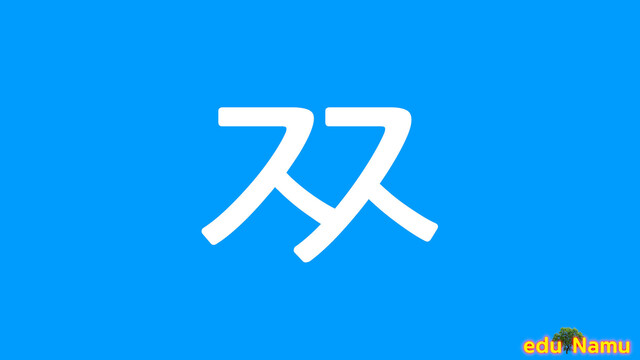 ㅉ
ㅉDouble vowels
Diphthongs formed by combining two vowel shapes into one glide, e.g. ㅗ (o) + ㅏ (a) = ㅘ (wa). If you already know the single vowels from the earlier chapter, most of these are predictable — read the two parts in order and blend them.
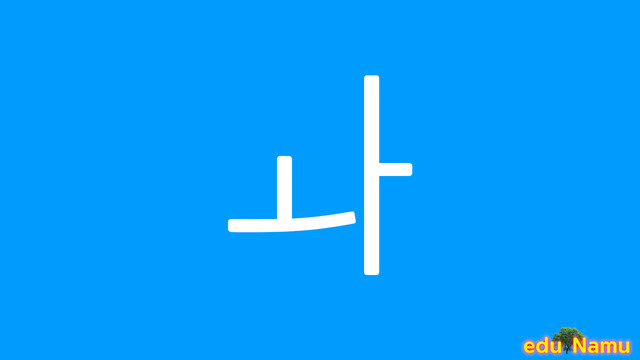 ㅘ
ㅘ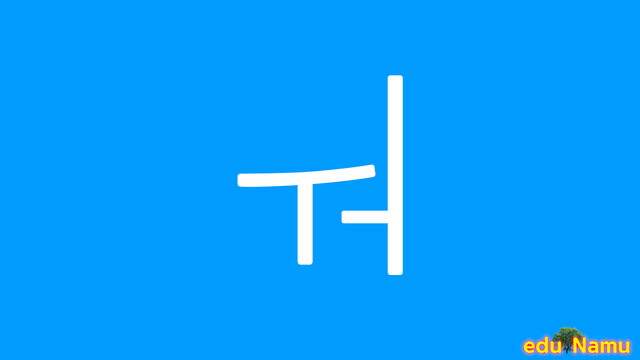 ㅝ
ㅝ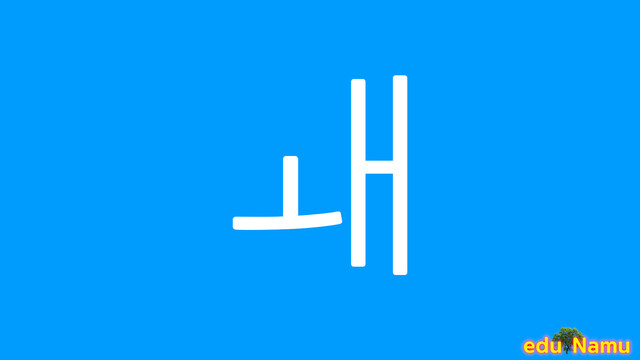 ㅙ
ㅙ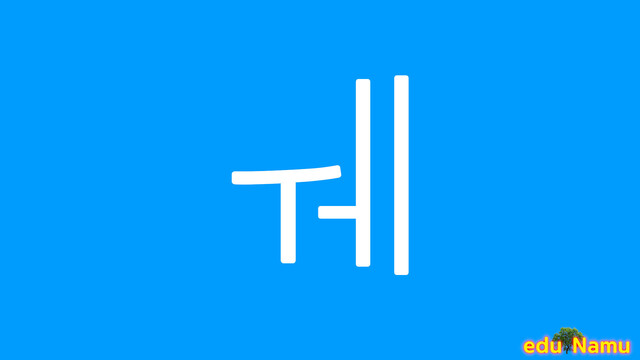 ㅞ
ㅞ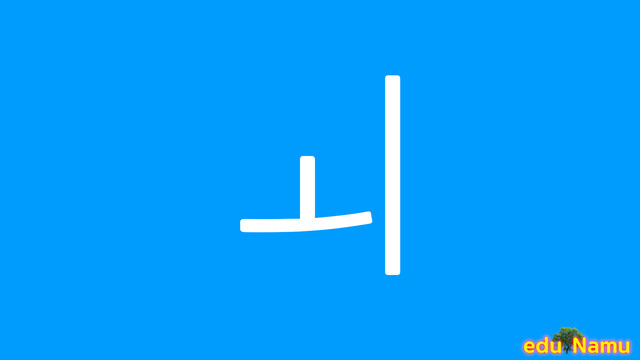 ㅚ
ㅚ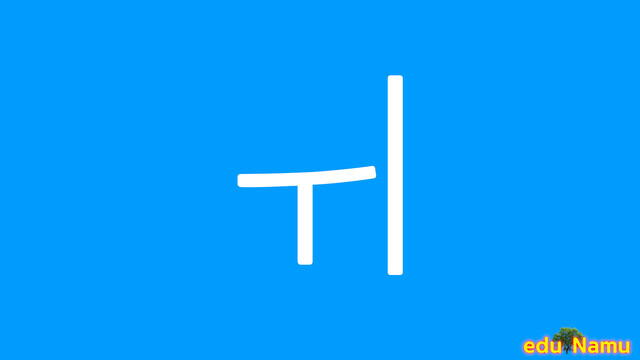 ㅟ
ㅟ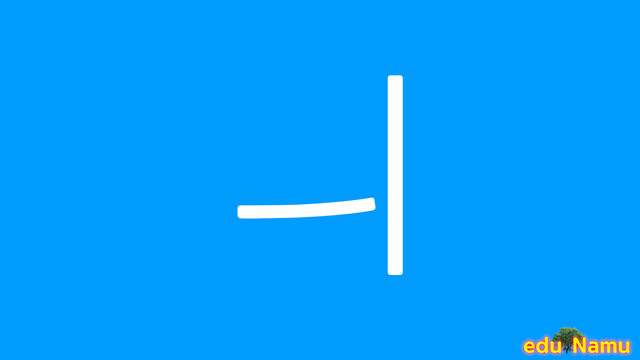 ㅢ
ㅢForming syllables
This is where individual letters become real syllable blocks — the mechanic explained above, now practiced across consonant + vowel, silent-consonant + vowel, and vowel + batchim combinations.
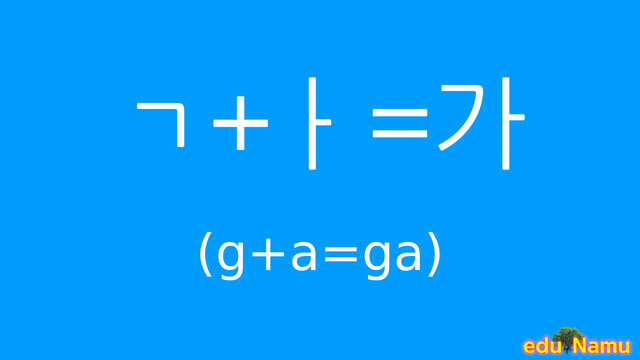 가
가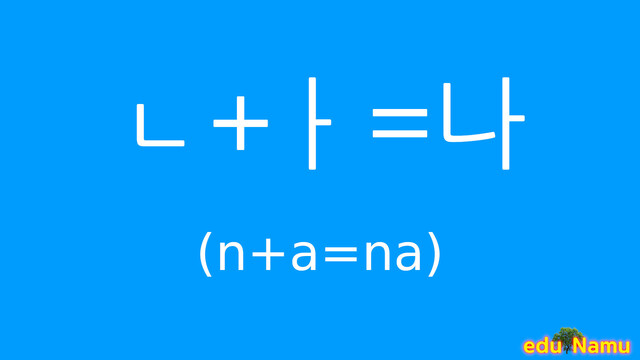 나
나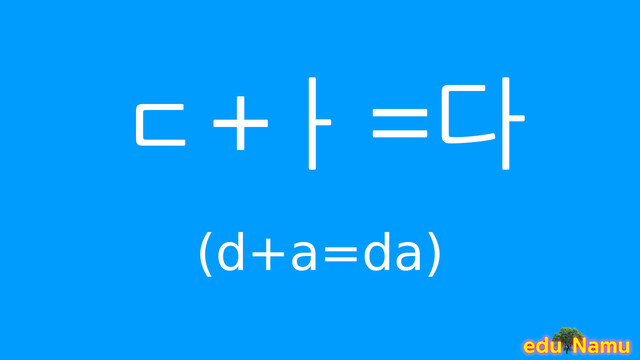 다
다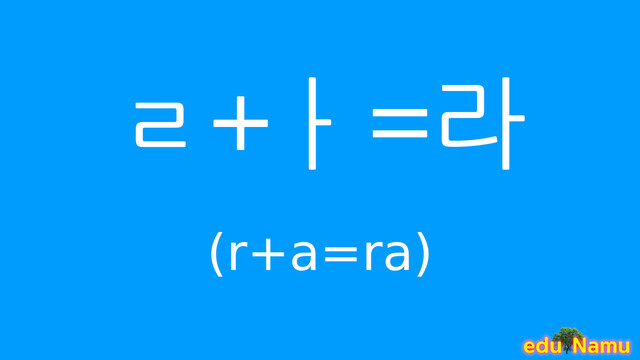 라
라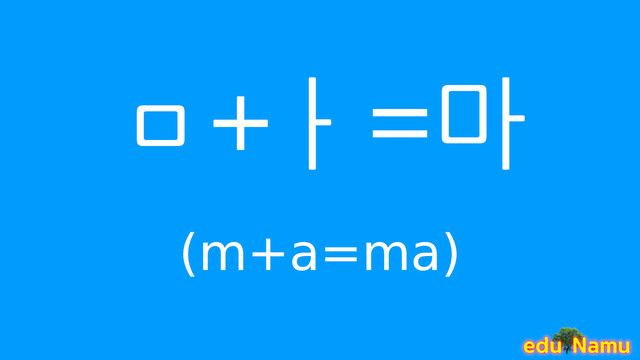 마
마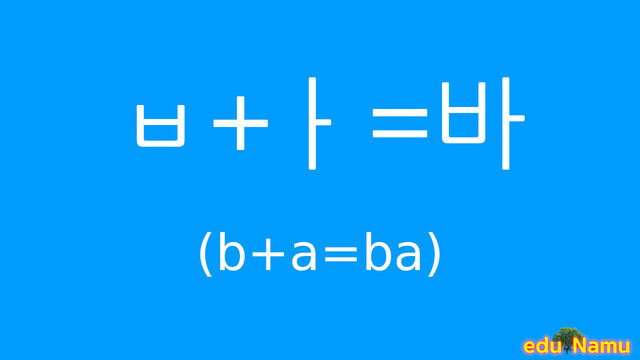 바
바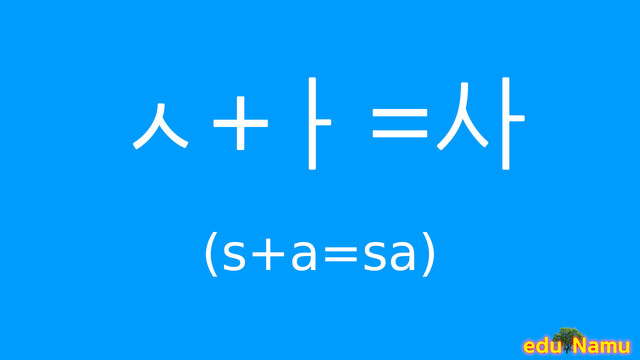 사
사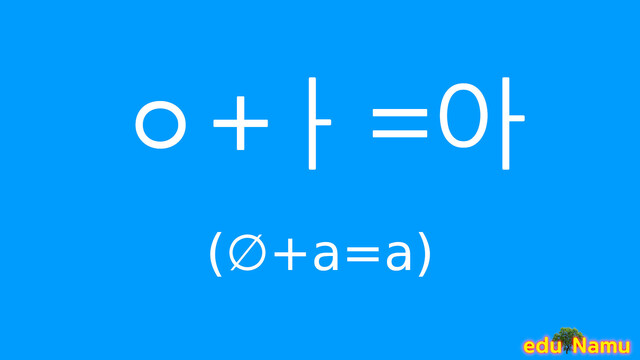 아
아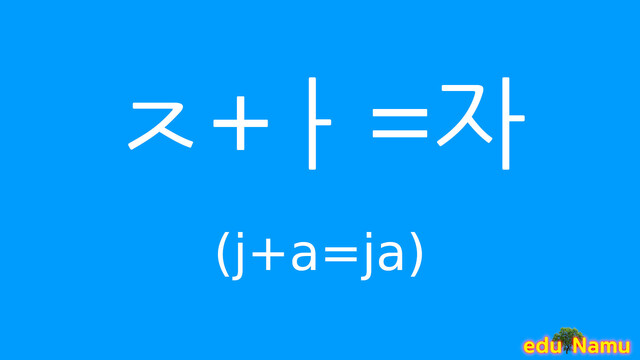 자
자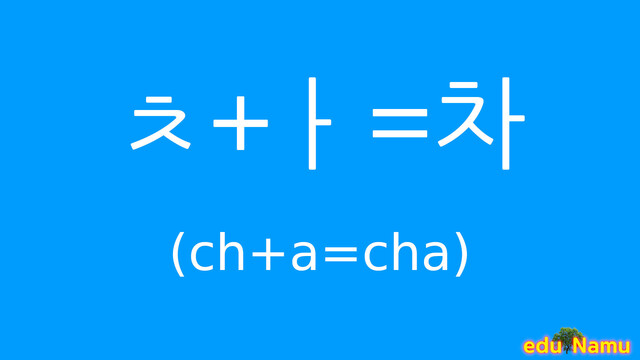 차
차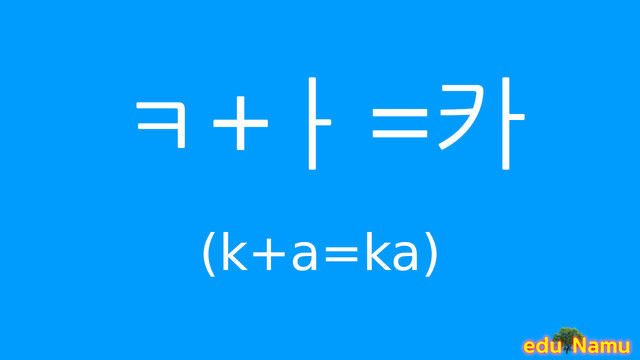 카
카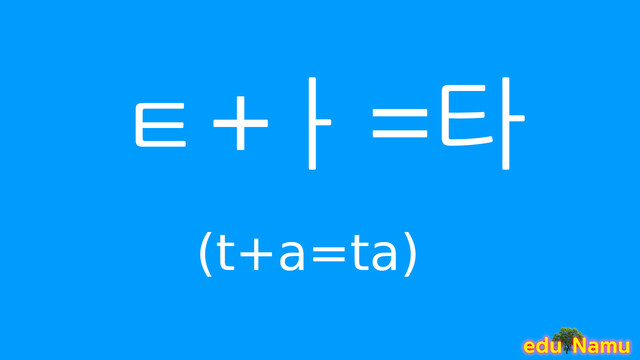 타
타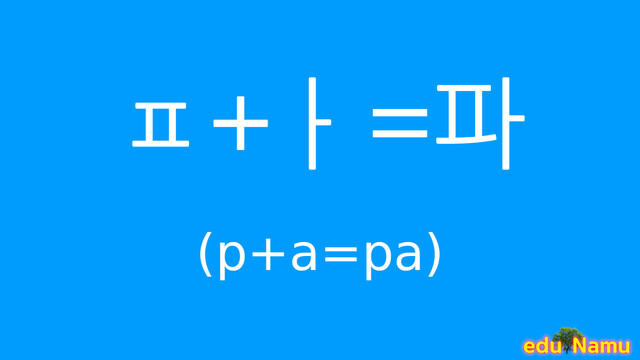 파
파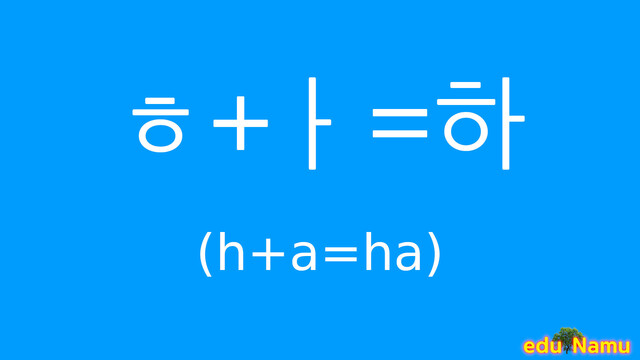 하아
하아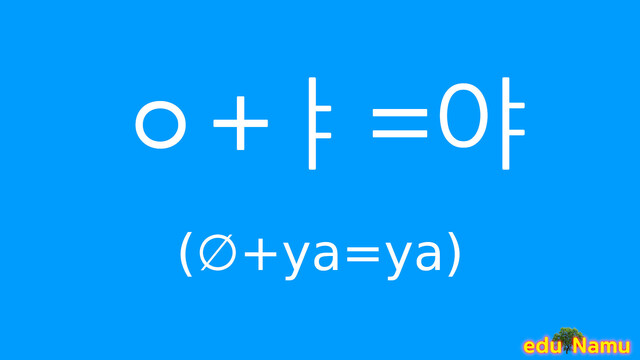 야
야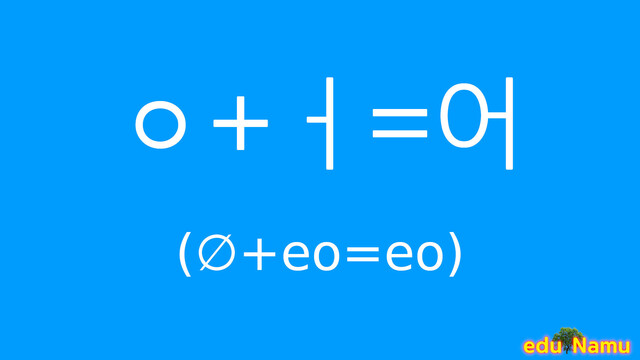 어
어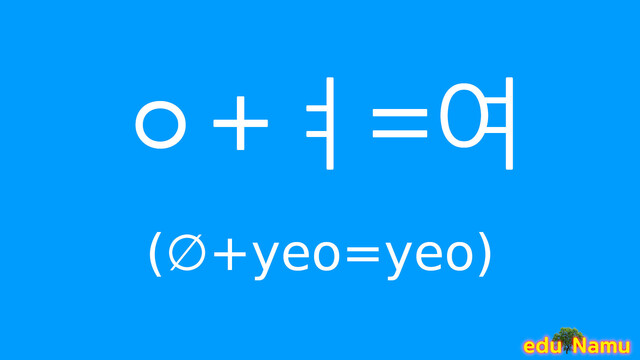 여
여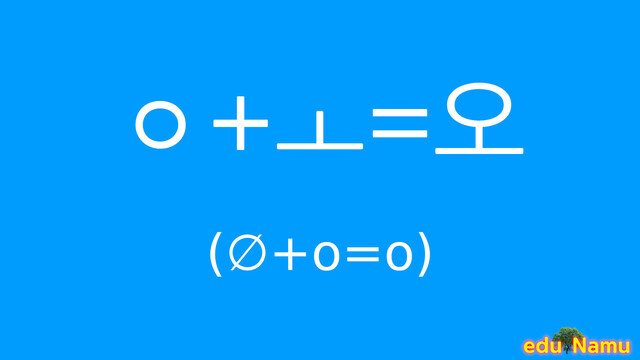 오
오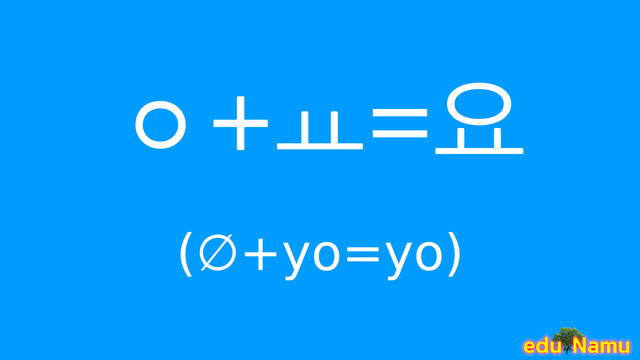 요
요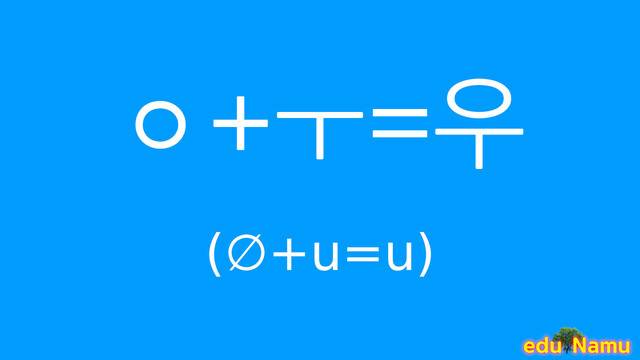 우
우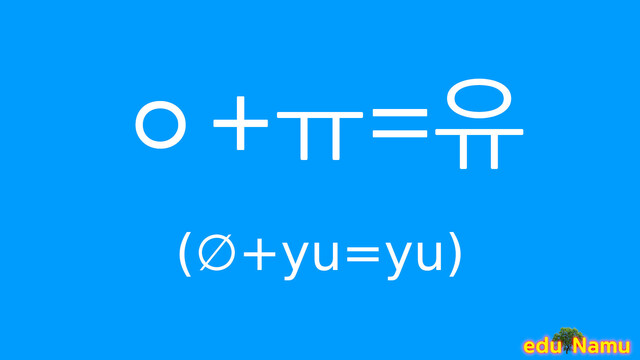 유
유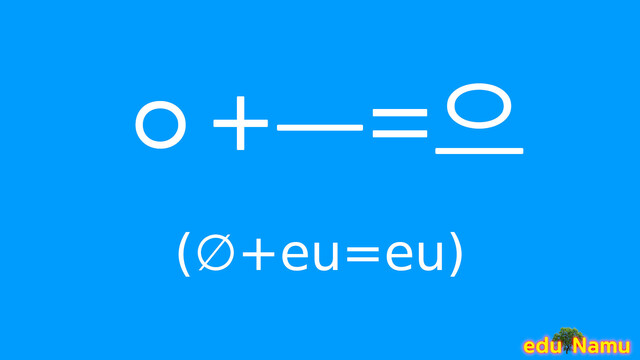 으
으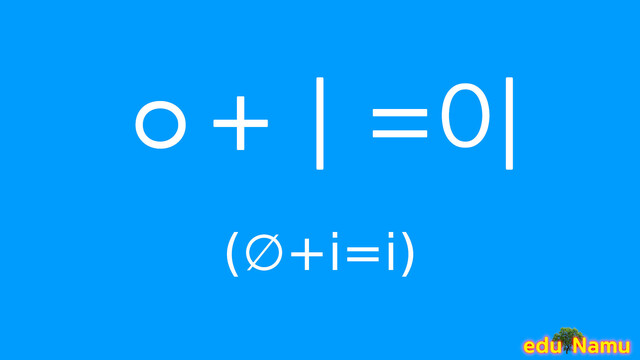 이
이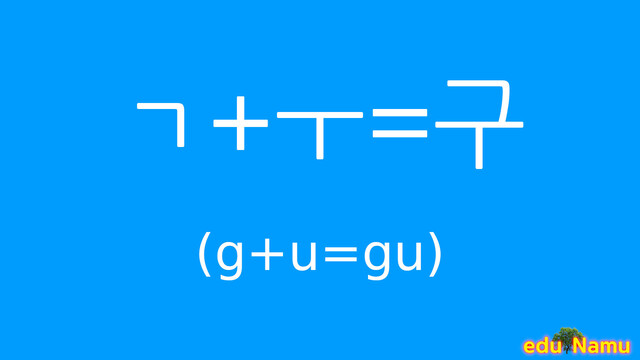 구
구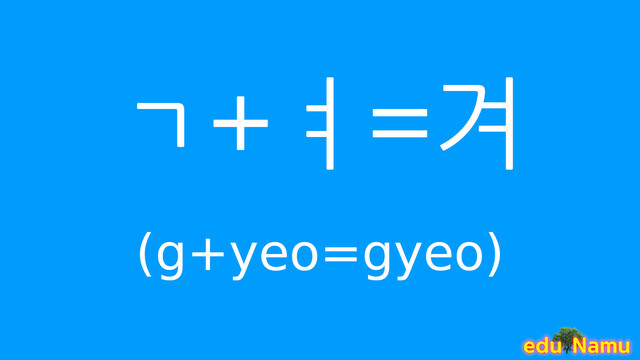 겨
겨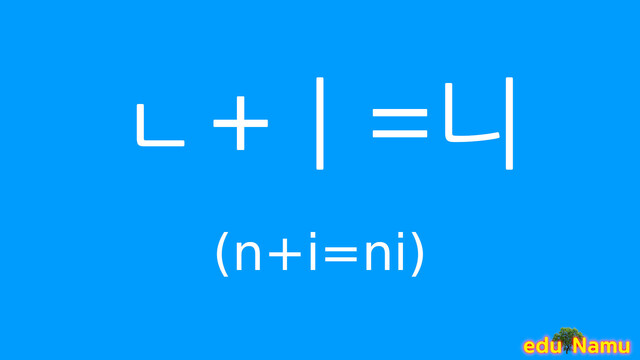 니
니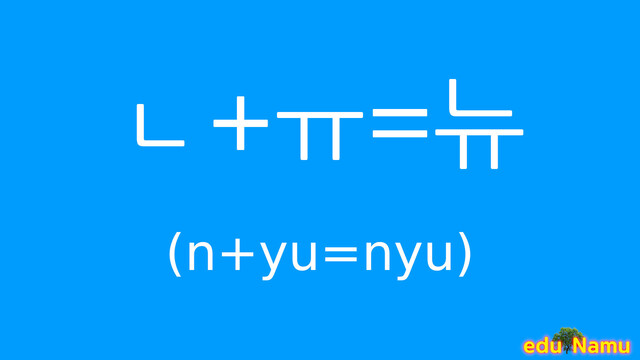 뉴
뉴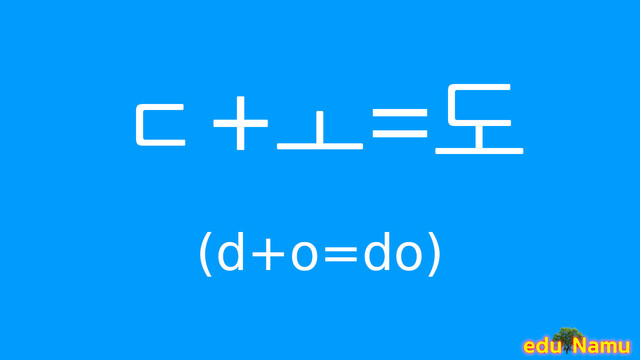 도
도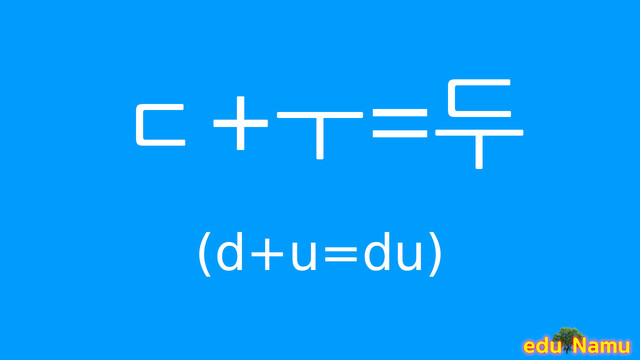 두
두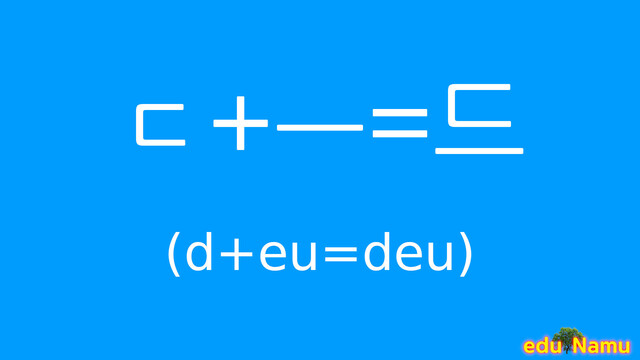 드
드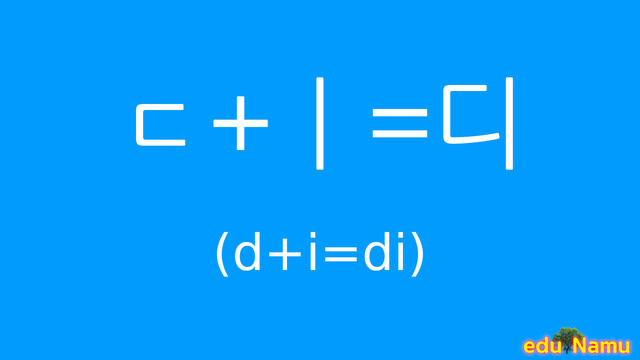 디
디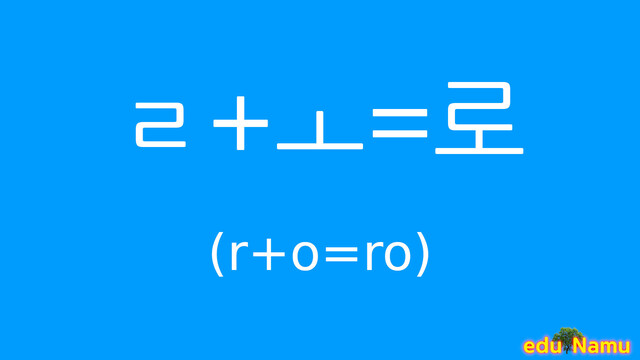 로
로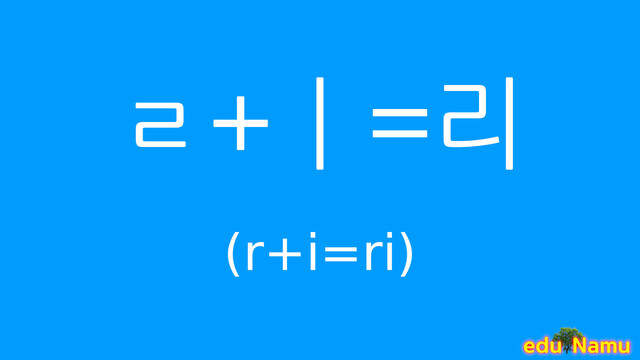 리
리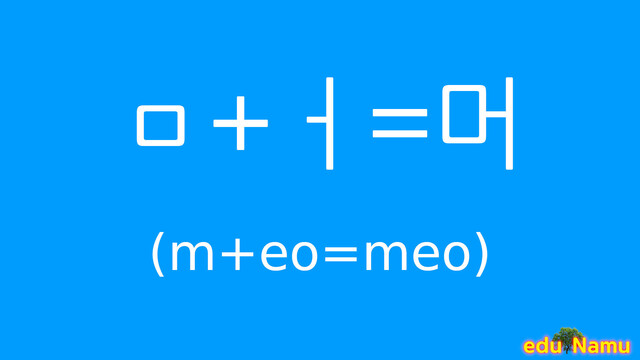 머
머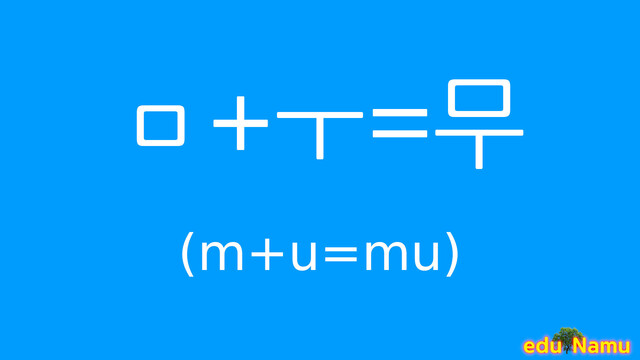 무
무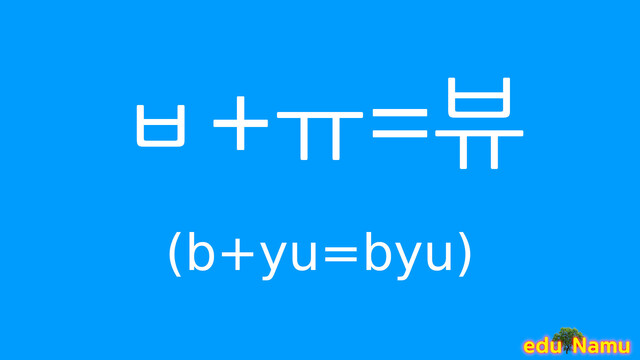 뷰
뷰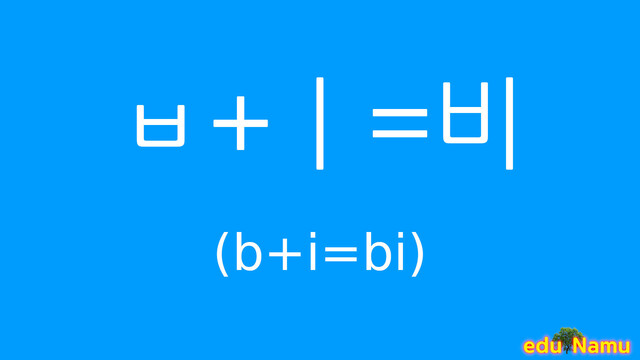 비
비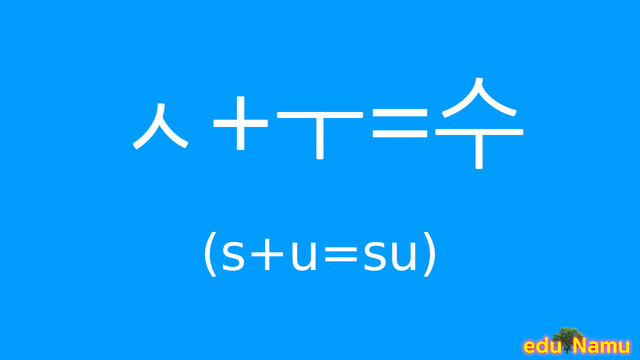 수
수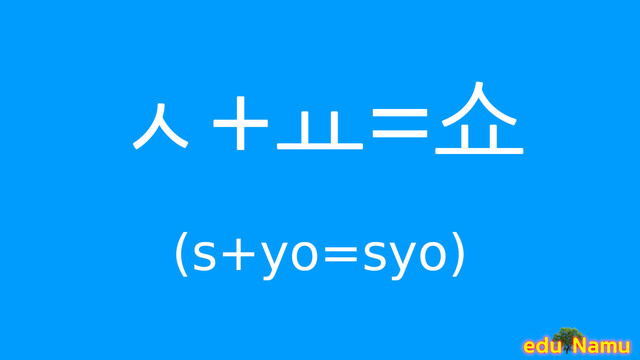 쇼
쇼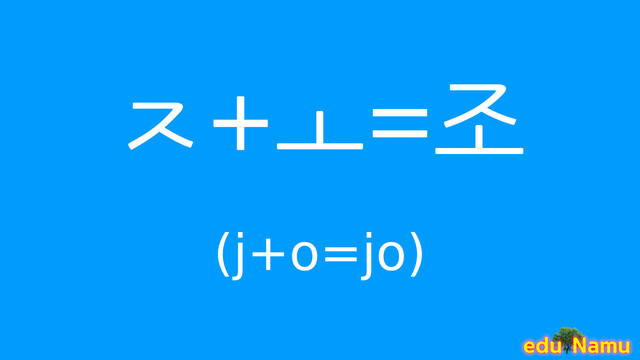 조
조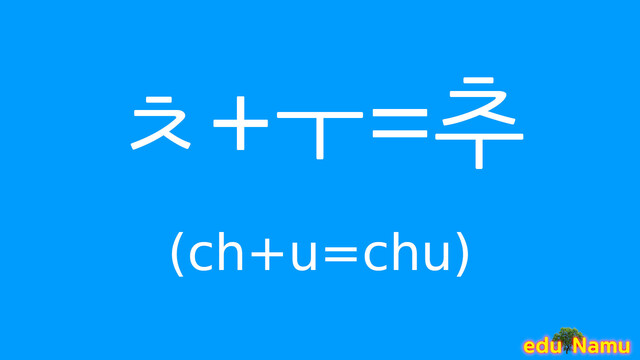 추
추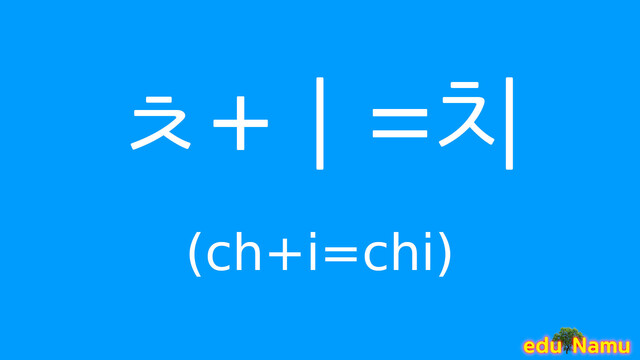 치
치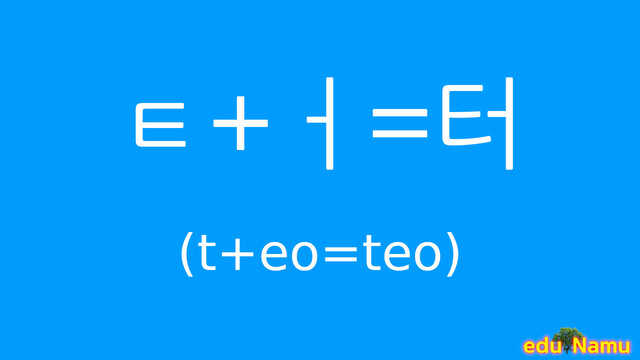 터
터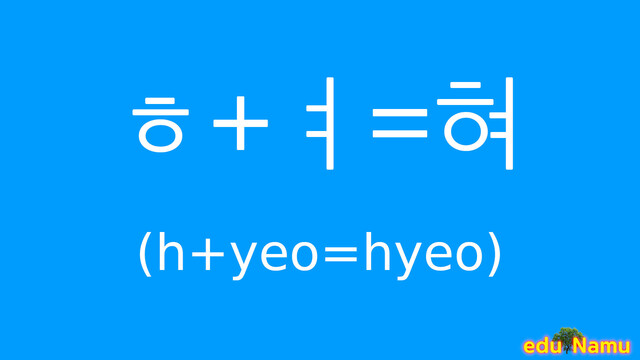 혀
혀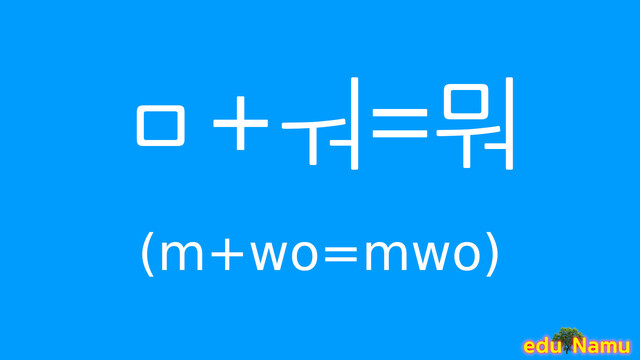 뭐
뭐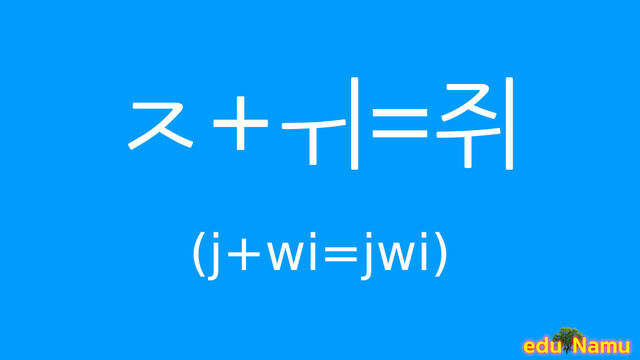 쥐
쥐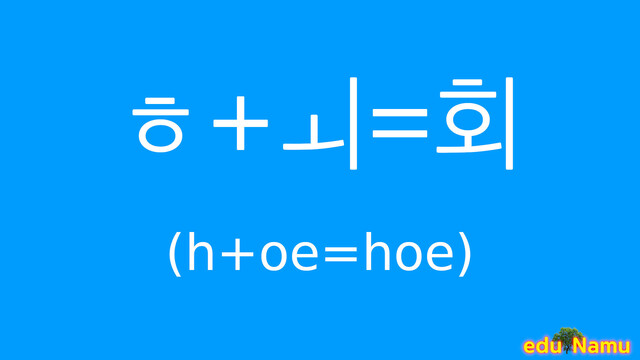 회
회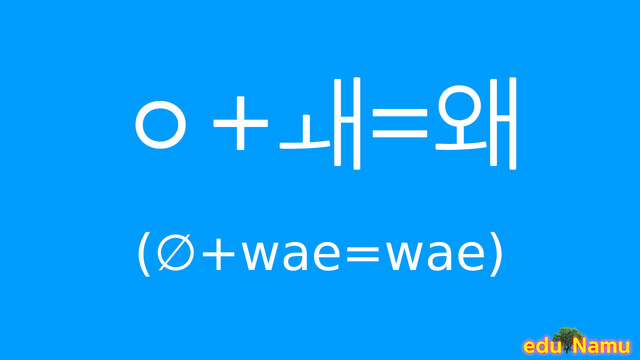 왜
왜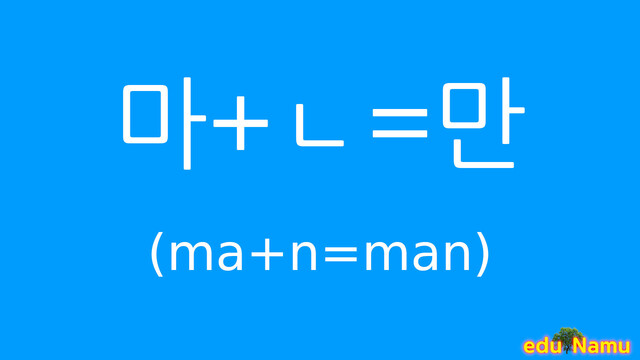 만
만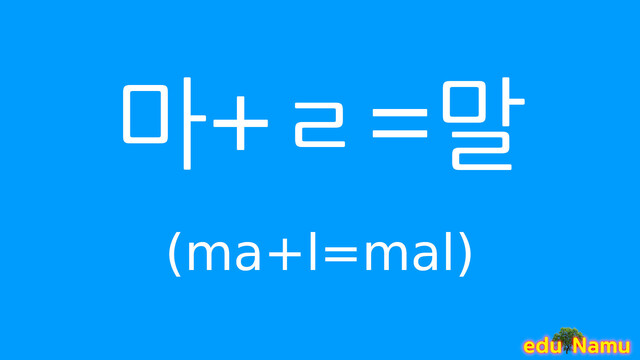 말
말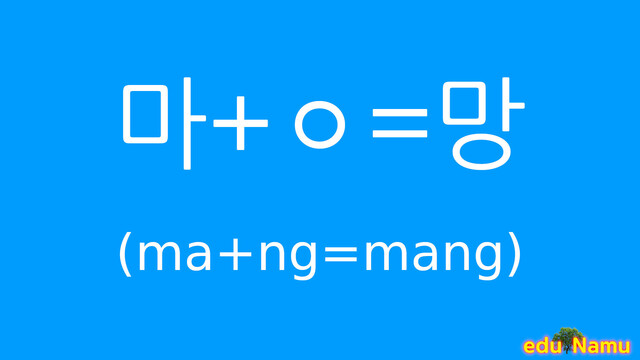 망
망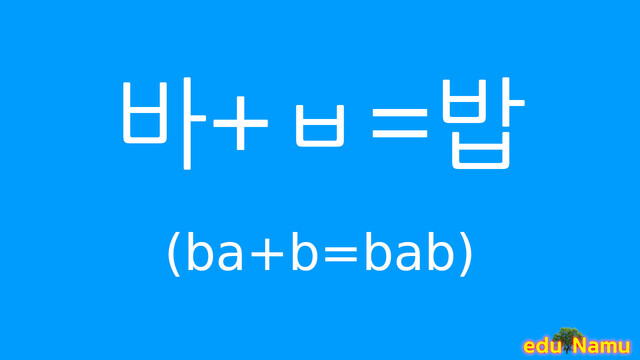 밥
밥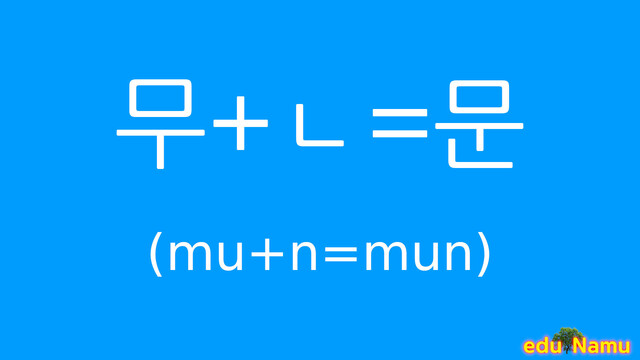 문
문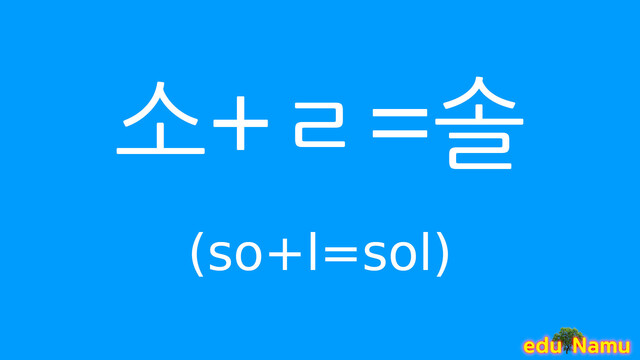 솔
솔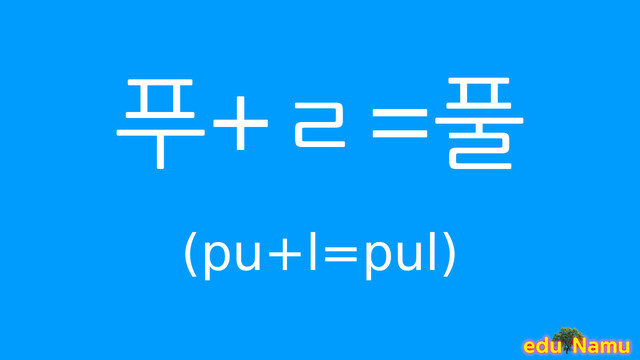 풀
풀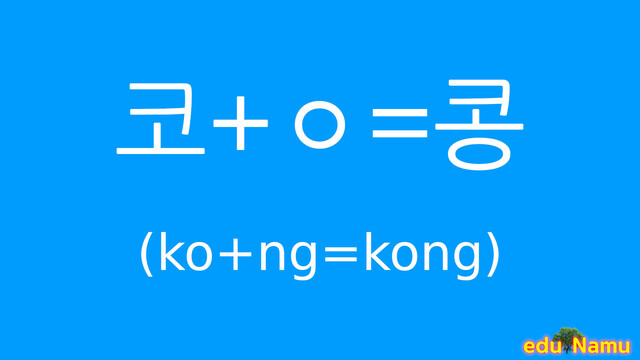 콩
콩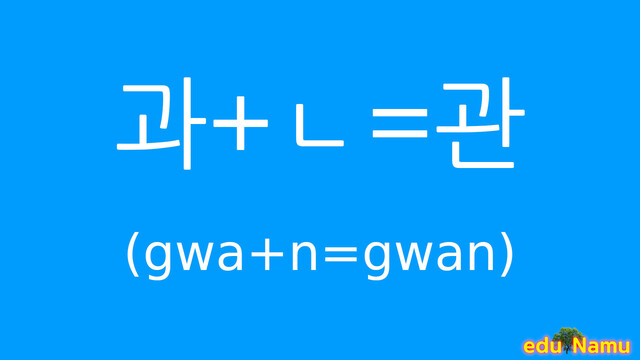 관
관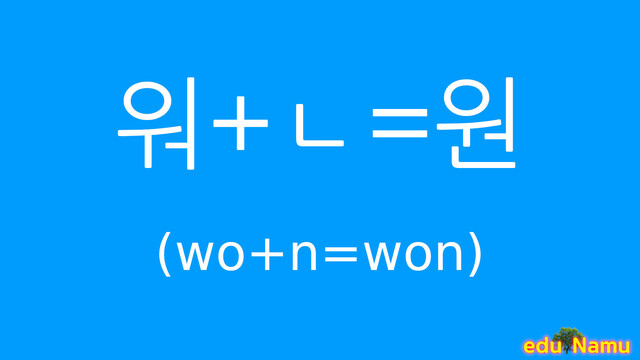 원
원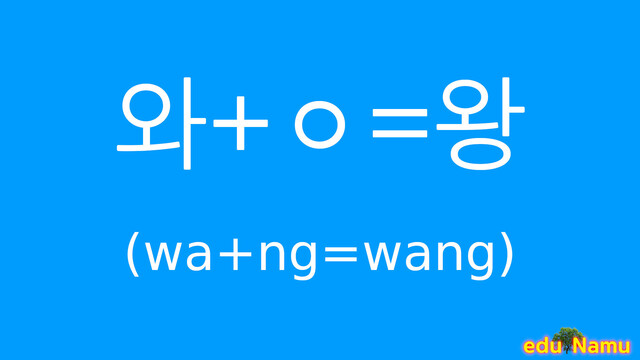 왕
왕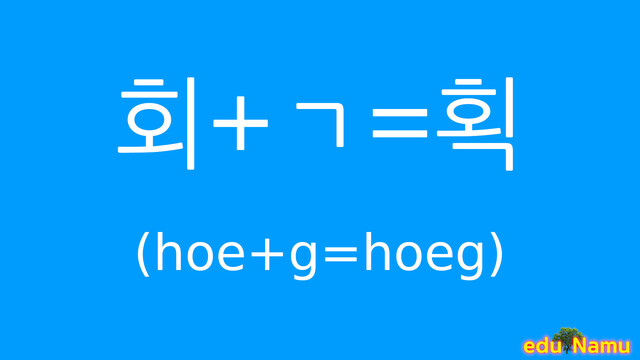 획
획Forming words
The payoff chapter: real Korean words built from everything above — 가수 (singer), 나무 (tree), 바다 (sea) — so you can hear the letters you've learned doing actual work, not just isolated sounds.
 가수
가수 나무
나무 다리
다리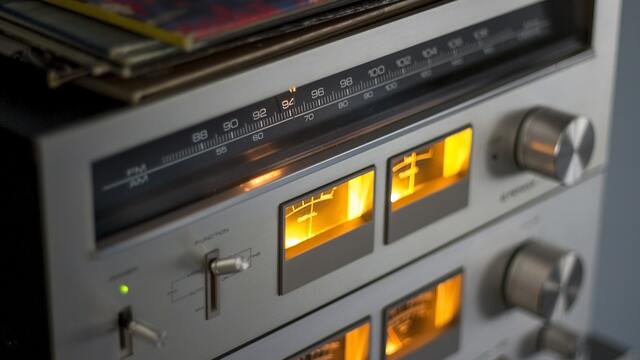 라디오
라디오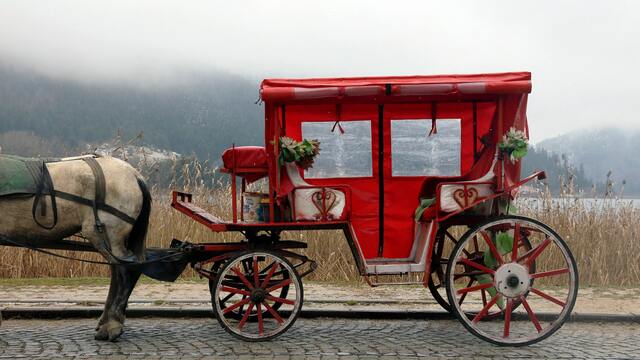 마차
마차 바다
바다 사자
사자 아기
아기 자두
자두 차이
차이 카드
카드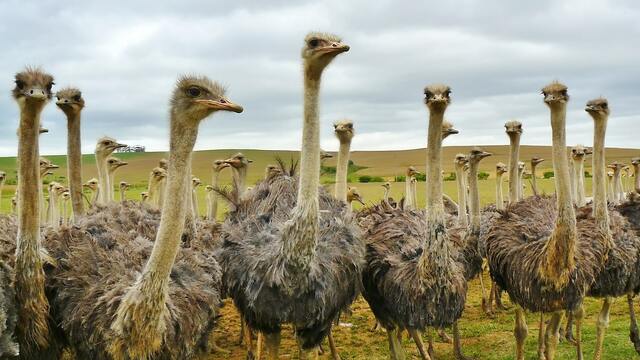 타조
타조 파도
파도 하나
하나 아이
아이 야구
야구 어머니
어머니 여자
여자 오리
오리 요리
요리 우유
우유 유리
유리 으로
으로 이유
이유Practice what you just learned
Reading about Hangul and actually retaining it are different things — the fastest way to make these letters stick is spaced-repetition practice. eduNamu's Korean alphabet course covers exactly the letters on this page, free, with the same audio and a review system that brings each letter back right before you'd forget it.